

Do I need a license to fly a drone in Canada?
- Date 10/07/2024
Introduction
The use of aircraft in Canadian airspace is regulated by Transport Canada. The Canadian Aviation Regulations (CARs) set out the legal requirements for flying drones in Canada.
As of June 2019, Transport Canada classifies drones into four categories based on their take-off weight :
- Category 1 : Drone weighing less than 250 grams
- Category 2 : Drone weighing between 250 grams and 25 kilograms
- Category 3 : Drone weighing between 25 kilograms and 150 kilograms
- Catégorie 4: Drone weighing over 150 kilograms
Consequently, the regulations governing drone piloting in Canada depend on the weight of the aircraft you wish to fly. In the following sections, we'll answer the question “Do I need a license to fly a drone in Canada ?” for each of these 4 drone categories.
Category 1 : Drone weighing less than 250 g
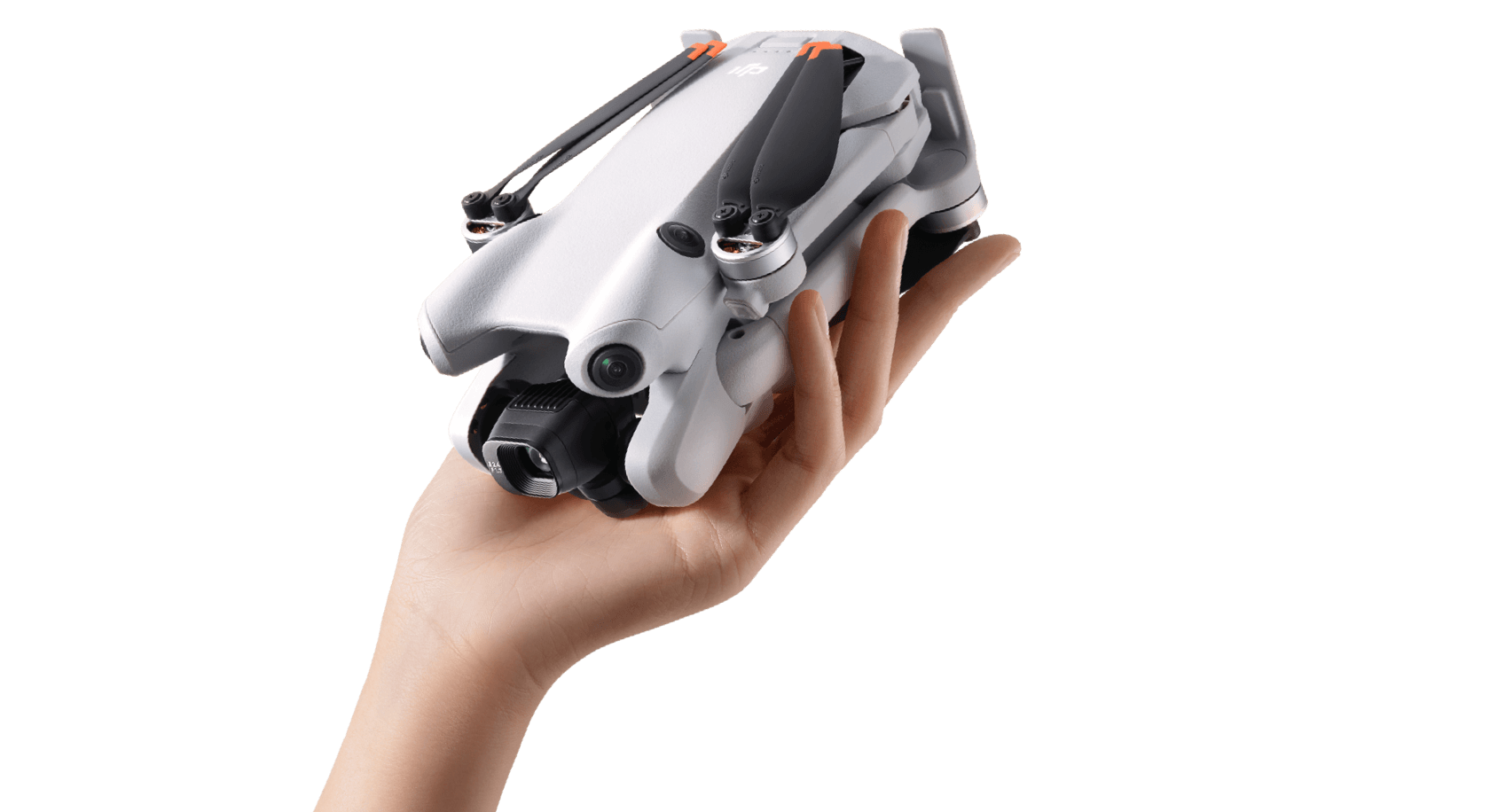
In Canada, a drone with a take-off weight of less than 250 grams is called a “micro drone” or “micro RPA”. This type of drone is very light and compact, making it the ideal partner for hiking and travel. However, because of its small mass, the micro RPA is more unstable in windy conditions, and its camera is less powerful than heavier drones.
In Canada, do I need a license to fly a drone weighing less than 250 g ?
In Canada, you don't need a license to fly a drone weighing less than 250 grams. However, if you add weight to a drone and its take-off weight reaches 250 grams or more, it will be subject to small RPA regulations (250 g ≤ weight ≤ 25 kg).
The micro RPA pilot must still follow certain rules.
First, as mentioned in article 900.06 of the CARs, a pilot must ensure that he does not operate their drone in a reckless or negligent manner as to endanger or be likely to endanger aviation safety or the safety of any person. This section of the CARs applies to all drone categories, including micro RPAs. A pilot found guilty of compromising air safety or the safety of persons on the ground is liable to a fine of $1,000 as an individual and/or $5,000 as a corporation.
In order for a micro RPA pilot to comply with CAR 900.06, Transport Canada recommends following these general rules :
- Maintain the micro RPA in direct line of sight.
- Avoid flying your micro RPA above 400 ft above ground level (AGL).
- Keep a safe lateral distance between your micro RPA and other people.
- Stay far away from aerodromes, water aerodromes, and heliports.
- Avoid flying near critical infrastructure.
- Stay clear of aircraft at all times.
- Conduct a pre-flight inspection of your micro RPA.
- Keep the micro RPA close enough to maintain the connection with the remote controller.
- Follow the manufacturer’s operational guidelines.
- Avoid special aviation or advertised events.
Secondly, micro RPA pilots must comply with sections 900.07 and 900.08 of the Canadian Aviation Regulations (CARs).
900.07
A person who operates a remotely piloted aircraft shall ensure that the appropriate air traffic control unit, flight service station or user agency is notified immediately any time the aircraft is no longer under the person’s control and inadvertently enters or is likely to enter into Class F Special Use Restricted airspace, as specified in the Designated Airspace Handbook.
900.08
(1) No person shall operate a remotely piloted aircraft over or within the security perimeter established by a public authority in response to an emergency.
(2) Subsection (1) does not apply to the operation of a remotely piloted aircraft for the purpose of an operation to save human life, a police operation, a fire-fighting operation or any other operation that is conducted in the service of a public authority.
Thirdly, Micro RPAs are prohibited from entering the following zones without proper authorization :
- Class F special-use restricted airspace (CYR);
- airspace over a forest fire area or over any area that is located within 5 NM of a forest fire area, or any airspace for which a NOTAM for forest fire aircraft operating restrictions has been issued; and
- zones in which section 5.1 of the Aeronautics Act restricts the use of airspace for all aircraft.
To find out where micro RPAs are prohibited, please refer to the NAV Drone Viewer tool. We recommend checking this tool before each flight, as some zones are temporary.
Finally, an SFOC is now required to fly a micro RPA during a public event.
Category 2 : Drone weighing between 250 g and 25 kg
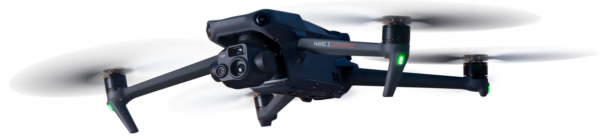
In Canada, a drone with a take-off weight of between 250 grams and 25 kilograms is known as a “small Remotely Piloted Aircraft” or “small RPA”. This type of drone is very popular, both for recreational and commercial use. Indeed, this weight range enables drone manufacturers to integrate payloads such as high-performance cameras, thermal cameras, Lidar sensors and more. What's more, thanks to its higher weight, the drone is much more resistant to wind, enabling more stable and fluid image capture.
In Canada, do I need a license to fly a drone weighing between 250 g and 25 kg ?
In Canada, holding a drone pilot certificate is mandatory to operate a drone weighing between 250 grams and 25 kilograms.
Depending on the type of operation, there are three certificates that allow you to fly a small drone:
- Basic Certification: Allows you to operate a small RPA under the following conditions: the flight must take place in uncontrolled airspace and away from any people not involved in the operation. This type of operation must be conducted within visual line of sight (VLOS), meaning the pilot or a visual observer must be able to see the drone at all times during the flight.
- Advanced Certification: Allows you to operate a small RPA in controlled airspace, near certified aerodromes, and near people not involved in the operation. These operations must also be conducted within visual line of sight (VLOS).
- Level 1 Complex Certification: Allows you to operate a small RPA beyond visual line of sight (BVLOS), in sparsely populated areas and away from aerodromes. This certificate also authorizes operations permitted under the advanced certificate.
How do I obtain a drone pilot's certificate to fly a drone weighing between 250 g and 25 kg ?
If you're interested in flying a small drone, we've created a comprehensive guide to help you learn more about drone pilot certificates. This guide will help you find out which of the two pilot certificates is right for you, and how to get it.
Category 3 : Drone weighing between 25 kg and 150 kg
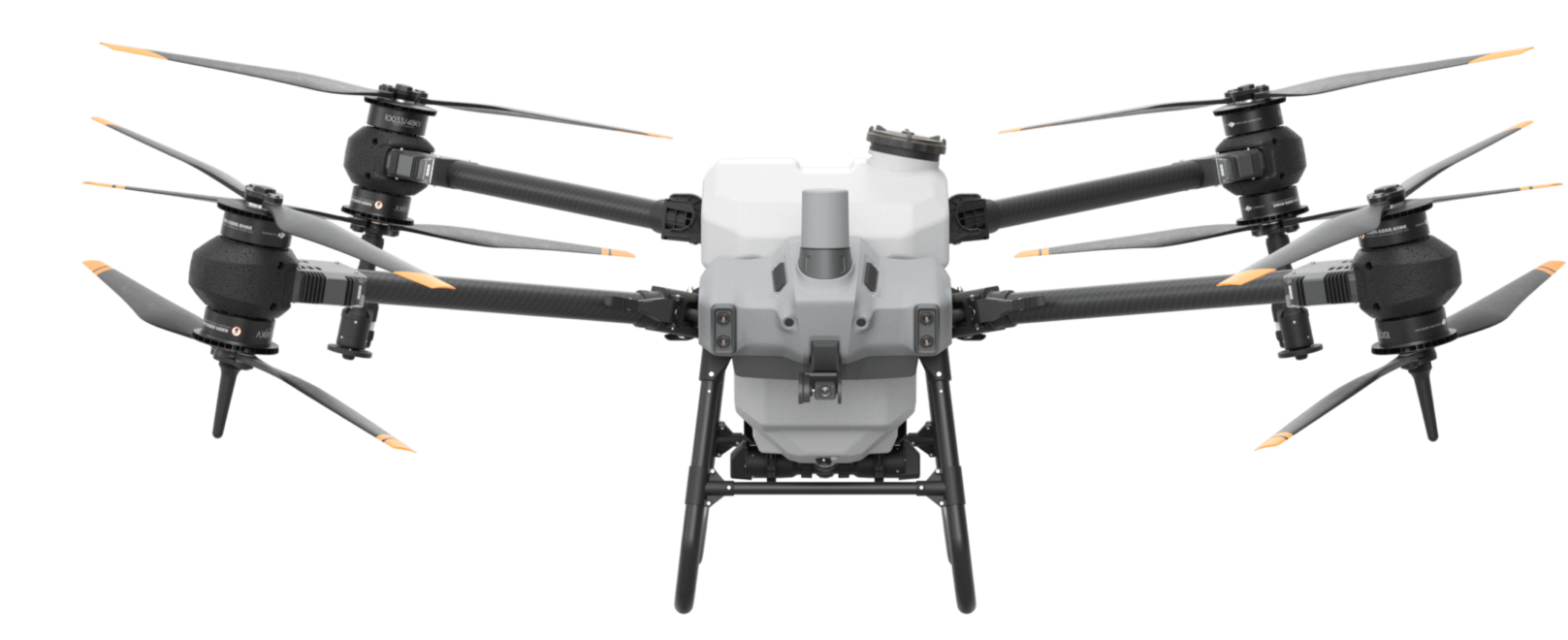
A drone with a takeoff weight between 25 kg and 150 kg is referred to as a “medium remotely piloted aircraft” or "medium RPA". These aircraft are generally used in the agricultural, military, and delivery sectors.
In Canada, do I need a license to fly a drone weighing between 25 kg and 150 kg ?
In Canada, it is mandatory to hold at least an Advanced Drone Pilot Certificate to operate a drone weighing between 25 kilograms and 150 kilograms.
Depending on the type of operations conducted, there are two types of pilot certificates that allow you to operate a medium-sized RPA:
- Advanced Certification: Allows you to operate a medium-sized RPA in controlled airspace, near certified aerodromes, and in proximity to people not involved in the operation. These operations must be conducted within visual line of sight (VLOS).
- Complex Level 1 Certification: Allows you to operate a medium-sized RPA beyond visual line of sight (BVLOS) in low-population areas and away from aerodromes. This certificate also authorizes all operations permitted under the Advanced Operations certificate.
It is not permitted to operate a medium-sized RPA with a Basic Pilot Certificate.
How do I obtain a drone pilot's certificate to fly a drone weighing between 25 kg and 150 kg ?
If you wish to operate a medium-sized RPA, we recommend consulting our comprehensive guide to learn more about drone pilot certificates.
Category 4 : Drone weighing over 150 kg
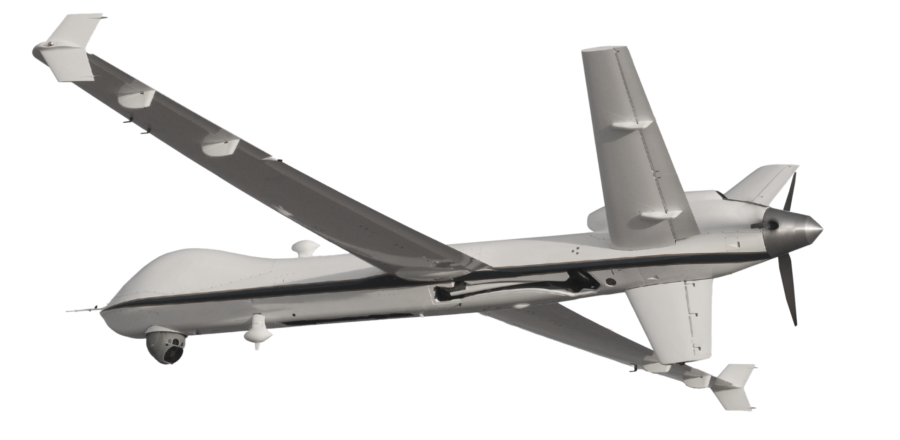
Drones weighing over 150 kg are generally used in the military and delivery sectors.
In Canada, do I need a license to fly a drone weighing more than 150 kg ?
In Canada, to fly a drone weighing over 150 kilograms, you need to get a Special Flight Operations Certificate (SFOC).
To find out more about the process of obtaining a SFOC, please refer to the “Get permission for special drone operations” page on the Transport Canada website. As indicated on this page, one of the prerequisites for obtaining this type of SFOC is to hold at least an Advanced Drone Pilot Certificate. To find out how to get a Drone Pilot Certificate, please check out our guide by clicking on the button below.
Other Cases
Do I need a drone pilot's license if I want to use a drone for commercial purposes ?
This is a question we're often asked, as the previous regulations governing drone piloting in Canada distinguished between recreational and commercial activities.
As of June 2019, drone operations are no longer categorized according to the purpose for which the drone is used. In fact, the CARs do not distinguish between recreational vs. commercial drone use. The regulations are the same whether you're using your drone for recreation or to provide paid services.
As discussed earlier in this article, the requirement to hold a drone pilot certificate depends solely on the weight of the aircraft and the type of operations being conducted.

Do foreign pilots need a license to fly a drone in Canada ?
In Canada, you are considered a foreign pilot or operator if you are not a Canadian citizen, permanent resident or federally or provincially incorporated company.
To fly a drone in Canada, a foreign pilot must comply with the same requirements as a Canadian pilot. In addition, if they wish to fly a drone weighing 250 g or more, foreign pilots must obtain an SFOC from Transport Canada.
To learn more about the process of obtaining a SFOC in this context, please refer to the page “Get permission to fly a drone as a foreign pilot or operator” on the Transport Canada website.
For example, a tourist wishing to fly a 500-gram drone in Canadian controlled airspace will need to pass Transport Canada's advanced exam, obtain a foreign pilot SFOC, and finally pass the flight review.
Penalties for Non-Compliance
If you fly a drone weighing 250 grams or more without a pilot's certificate, you can be fined as follows :
- Up to $1,000 for individuals
- Up to $5,000 for legal entities
Conclusion
Flying drones in Canada is governed by strict regulations that mainly depend on the weight of the aircraft. Drones weighing less than 250 g can be operated without a certificate, as long as specific safety rules are observed. Drones weighing between 250 g and 25 kg require a pilot certificate, which is available for basic, advanced, or level 1 complex operations depending on the type of activity. For drones between 25 kg and 150 kg, an advanced or level 1 complex certificate is required, with the choice depending on the nature of the operations. Drones over 150 kg require a Special Flight Operations Certificate (SFOC). Foreign pilots must also comply with Canadian requirements. Failure to follow these rules can result in significant fines for individuals and businesses. It is therefore essential to fully understand and adhere to the regulations to ensure safe and compliant drone operations.